





Goose Dinner in Lower Austria: Why the St. Martin’s Goose is a Tradition and What Goes With It
When the first reservations come in during November with the note “for the goose,” the kitchen knows: Fall is officially here. In Lower Austria, the St. Martin’s goose is something of a culinary finale before Advent. Crispy skin, juicy meat, served with red cabbage and dumplings, and a table full of people who haven’t seen each other often enough over the course of the year.
In this post, we’ll explain where the tradition comes from, what goes on the plate, how to spot a good goose, and when and where you can enjoy goose here at the foot of the Semmering.
Goose Dinner in Lower Austria
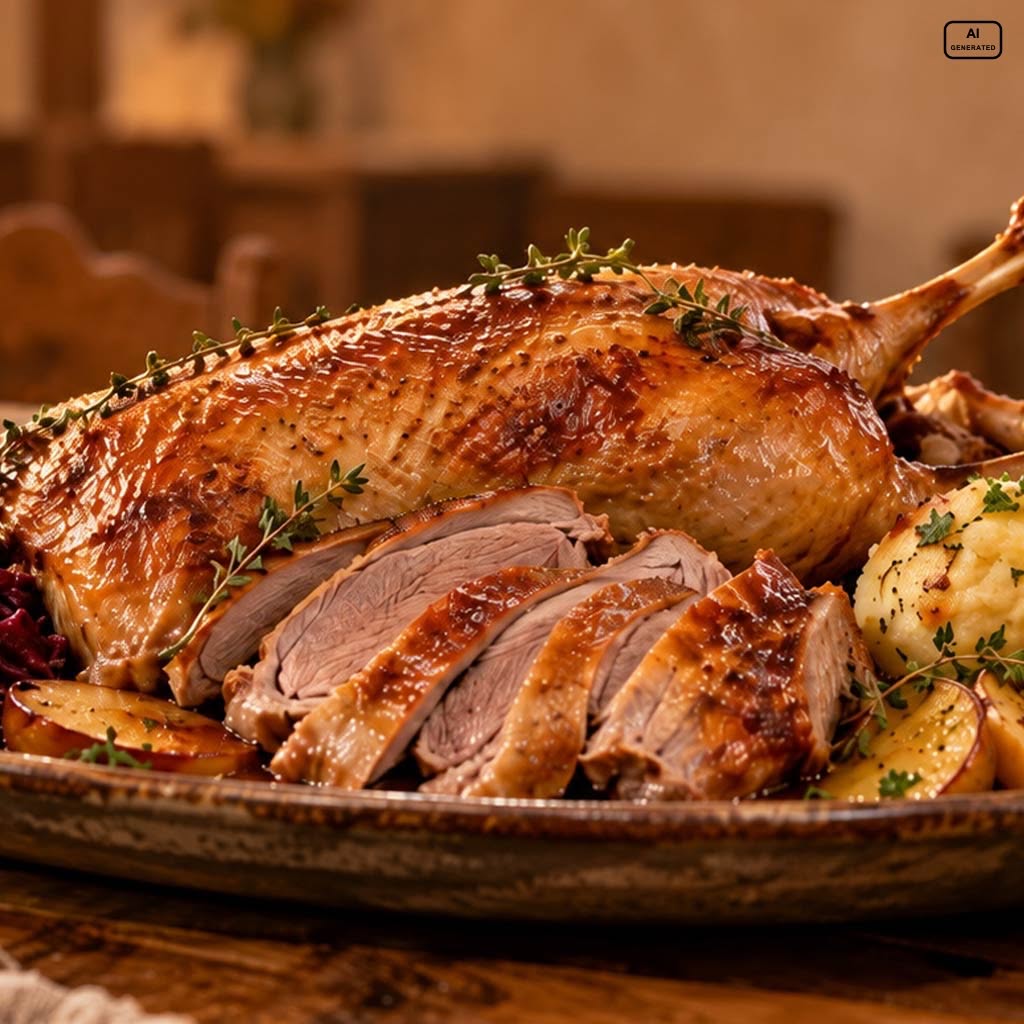
Where does the “Martinigansl” come from?
November 11 is the feast day of Saint Martin of Tours, and there are several stories associated with this date. The best-known is the legend according to which Martin hid in a goose pen because he did not want to become a bishop, and the cackling geese gave him away. As punishment, they ended up in the oven. A charming story, though historically rather dubious.
The calendar offers a more concrete basis: For centuries, St. Martin’s Day was the due date for rent and taxes, often paid in kind, and a goose was a common form of payment. At the same time, the farming year came to an end, farmhands changed shifts, and the geese—having spent the summer grazing—were now at their heaviest. In addition, in the past, a period of fasting used to begin after St. Martin’s Day and last until Christmas. The goose dinner was thus the last big feast before that. All of this gave rise to a tradition that continues to this day, even though no one has fasted for a long time.
In Lower Austria, “Ganslzeit” has now expanded to about four weeks. Many restaurants start at the end of October, and most stop in mid- to late November. We keep it shorter and more focused: two weeks around St. Martin’s Day.
What goes with roast goose?
In Lower Austria, the debate over side dishes is about as heated as the one over dumpling dough, so here are just the classics that our kitchen also uses as a guide:
How can you tell if a goose is cooked well? The skin is crispy but not burnt, the meat is juicy all the way to the bone, and the fat has been rendered off—it hasn’t remained in the meat. This takes time in the oven—usually several hours at a low temperature, followed by a brief time at a high temperature at the end.

Goose Season Here: November 2–15, 2026, in Breitenstein
This year, we’ll be serving the goose from November 2 through 15, 2026, at our branch in Breitenstein, where we’re based while the Parkhotel in Hirschwang undergoes renovations. The kitchen, the team, and the recipe are the same—only the address has changed: Hauptstraße 69, 2673 Breitenstein.
Das Gansl is open for lunch and dinner (from 12:00 p.m. to 9:00 p.m.); reservations are strongly recommended during these two weeks, especially on weekends and around November 11.
Roast Goose and a Fall Hike: Make a Weekend of It
In early November, the Rax Cable Car is already undergoing maintenance, but that’s when the valley is at its best: crisp air, colorful forests, and empty trails. The railway hiking trail along the Semmering Railway starts practically right outside our front door; the Ghega Museum and the “20-Schilling View” of the Kalte Rinne Viaduct are within easy walking distance. Afterward, a roast goose, then a room at the inn, and the next day, breakfast with a view of the valley. That’s how a meal turns into a weekend getaway.
If you’re coming from Vienna, you can get there in just over an hour by car, or take the train to Payerbach-Reichenau and then the RUFbus—it’s just as easy. And for anyone who doesn’t feel like hiking anymore in November: There’s a bowling alley right in the building, and a night of bowling after the goose dinner is a tried-and-true remedy for that full, bloated feeling.
